Milwaukee String Trimmer FUEL vs Brushless: Which Is Better? (October 2026)
For Milwaukee string trimmer FUEL vs Brushless, choose the M18 FUEL with QUIK-LOK for multiple yard jobs or the M18 Brushless for routine grass trimming. Both use brushless motors; attachment support is the clearest reason to choose the FUEL.
On this page (10 sections)
- Milwaukee string trimmer FUEL vs Brushless: what is the main difference?
- Who should choose the FUEL with QUIK-LOK?
- Who should choose the M18 Brushless?
- How should batteries affect the choice?
- Which model will be more comfortable to use?
- How should you set up either trimmer?
- How do you get cleaner results without wasting line?
- What care helps prevent feed problems?
- Which buying mistakes should you avoid?
- Milwaukee FUEL vs Brushless: which should you buy?
For Milwaukee string trimmer FUEL vs Brushless, choose the FUEL with QUIK-LOK if you plan to use attachments for other yard jobs. Choose the Brushless if you mainly need a dedicated grass trimmer.
Both tools have brushless motors, so the names don't describe a choice between brushless and another motor type. The useful question is whether you need an attachment system or a tool focused on trimming.
Neither choice should rest on the FUEL name alone. Start with your yard routine, then check battery needs, handling and the cutting head you'll maintain.

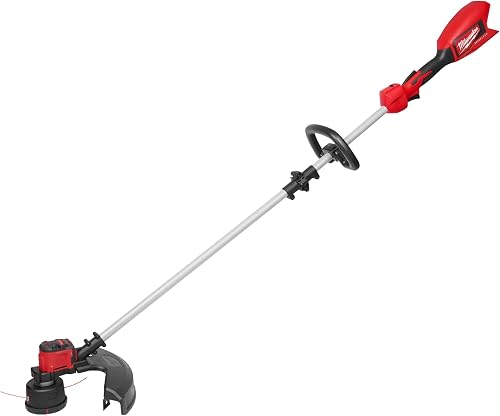 Best for routine grass trimming
Milwaukee M18 Brushless Trimmer (Tool Only)
Milwaukee string trimmer FUEL vs Brushless: what is the main difference?
The QUIK-LOK attachment connection is the clearest difference for buyers. The FUEL supports 13 Milwaukee QUIK-LOK attachments, giving it a role beyond trimming when paired with suitable attachments.
The Brushless makes sense when grass trimming is the job you need to cover. Its bump line advance and choice of line sizes are useful for that routine, without making an attachment system your reason to buy.
Milwaukee says the FUEL's POWERSTATE brushless motor delivers more power than 31cc gas powerheads. That comparison doesn't establish how much stronger it is than the Brushless model here.
Both have a 16-inch cutting width and reach 6,200 RPM, with the Brushless specified as up to that speed. Those shared figures describe cutting reach and rotational speed, not equal runtime or equal results in dense grass.
A wide cutting path helps cover open patches, but it also requires care around plants and narrow borders. Choose around the work you actually do, rather than treating the largest shared numbers as a tie-breaker.
Milwaukee FUEL vs Brushless string trimmers: who should buy each?
Buy the FUEL for a planned attachment setup and the Brushless for regular grass trimming. A short list of real jobs is more useful than choosing by model name.
Write down where you trim, what growth you cut and which other yard tools you need. If you can't name a compatible attachment you'll use, the FUEL's main advantage may sit unused.
If another yard task already calls for a shared powerhead, check that attachment before buying the trimmer. Compatibility matters more than the number of accessories available.
Who should choose the FUEL with QUIK-LOK?
Choose the FUEL when several yard jobs can share one powerhead. It suits buyers who want to build around QUIK-LOK and already have a purpose for compatible attachments.
That could include someone replacing separate tools or someone planning a yard-care setup from scratch. The benefit is using one powerhead across tasks, provided the attachments match the work.
Think through how you'll move between tasks. An attachment system makes more sense when you can finish trimming, change the attachment and continue working without needing another person to use the powerhead.
The tradeoff is that one shared powerhead serves one job at a time. Separate tools may suit a household where two people routinely work in different parts of the yard together.
You'll also need room for the attachments themselves. A shared powerhead can reduce duplicate equipment, but it doesn't remove the need to store shafts and cutting accessories safely.
Skip the FUEL if occasional grass trimming is your only task and you have no interest in attachments. Its added flexibility needs a real use to justify choosing it over a trimming-focused alternative.
Our guide to attachment-capable string trimmers explains what to check when comparing a powerhead with a fixed-purpose trimmer.
Who should choose the M18 Brushless?
Choose the Brushless for regular trimming around lawn edges, fences and obstacles. It fits a buyer who wants to keep grass tidy after mowing without building a multi-tool attachment setup.
The bump line advance lets you feed line using the head's bump mechanism. Follow the manual's steps, since repeated hard bumps won't solve a tangled spool or incorrectly loaded line.
This model accepts .080-inch and .095-inch line. The thinner option generally suits ordinary grass, while thicker line can be useful where tougher growth or abrasive surfaces wear line faster.
Don't choose thicker line automatically. Line size, cutting length and the amount of grass entering the head all affect the load on a battery trimmer.
The Brushless is also a sensible option to consider if your other yard tasks already have suitable tools. There's little reason to reorganize that setup around attachments just to trim grass.
Skip it if QUIK-LOK compatibility is a requirement. Buy the supported FUEL option instead of assuming that another M18 trimmer will accept the same attachment connection.
For woody stems or brush that calls for a blade, pause before choosing either trimmer. A string head is a grass-cutting tool, and neither a powerful motor nor thicker line makes an unapproved cutting accessory suitable.
How should batteries affect the choice?
Plan the battery and charging setup before buying either bare tool. The Brushless uses an 18V M18 battery sold separately, and the FUEL is also sold without a battery.
If you already use M18 tools, check your exact packs against the trimmer manual. A battery you share with a drill may also be needed elsewhere when it's time to cut the grass.
Don't assume a compact pack will cover a long fence line, and don't assume a larger pack is automatically the best fit. Battery choice involves usable work time, added weight and the tool's recommendations.
No runtime figure here supports a minutes-per-charge comparison. Your grass density, line setup and cutting technique also affect how much work you get from a charge.
Plan around your routine instead. Someone trimming a few missed patches has different battery needs from someone maintaining long borders or clearing neglected grass.
Include charging time in that plan, especially if you expect to move from trimming to another battery-powered yard task. A compatible charger and a workable charging routine matter as much as having a pack available.
If you're comparing tool-only purchases across platforms, our guide to buying a string trimmer tool only explains the battery and kit checks to make first.
Which model will be more comfortable to use?
Choose by working balance and posture, after checking weight in a matching configuration. The FUEL's stated weight is 13.2 pounds, while the Brushless has conflicting figures of 7 and 9.1 pounds.
Confirm both tools' weights with the battery and equipment you'll use before making a firm comparison. Don't treat a bare-tool number and a ready-to-use number as equivalent.
A trimmer that forces you to reach forward can tire your arms even when its weight seems manageable. Handle position should let you hold the head near cutting height without rounding your back.
Follow the manual when setting the support handle. Aim for a relaxed grip and enough room to guide the head without swinging from your shoulders.
Your yard layout matters too. Long fence runs involve sustained carrying, while small spaces with many obstacles demand frequent stops, turns and careful head control.
If possible, assess reach and balance before committing to a model. For a broader choice of tools to match your yard, see our battery string trimmer picks.
How should you set up either trimmer?
Start with the battery removed, then follow the exact model's assembly instructions. Fit the guard and handle correctly before checking the cutting head and line.
On the QUIK-LOK model, make sure the attachment connection is fully seated and secured as directed. Check it again after changing attachments rather than assuming the connection is ready because the shaft looks aligned.
For either tool, check the approved line diameter, loading direction and fill limit. The Brushless line options don't establish which line the FUEL head accepts.
Leave the guard's line-cutting blade in place and keep the line at the approved length. Extra-long line adds load and can make the head harder to control.
Clear stones, wire, toys and other loose objects from the work area. Wear eye protection, closed footwear and suitable clothing, and keep people and pets away from the cutting zone.
Begin in a clear patch of ordinary grass. Establish a comfortable cutting height and controlled sweep before moving near fences, beds or hard edges.
How do you get cleaner results without wasting line?
Use the line tips to cut, and take shallow passes when grass is tall or dense. Pushing the center of the head into a clump slows progress and makes wrapping more likely.
For long grass, reduce the height in stages instead of trying to reach the final height in one pass. Give the head room to clear cut material before moving back through the patch.
Watch where clippings and debris travel during your first passes. Adjust your position so you aren't directing material toward people, vehicles, windows or finished areas.
Along fences and masonry, guide the line close enough to cut grass without grinding it against the surface. Constant contact consumes line and does little to improve the finish.
Keep distance from tree bark, exposed roots and soft plant stems. A string trimmer can damage them quickly, so leave a small buffer and finish delicate spots with a suitable hand tool.
If you're learning sweep direction and cutting height, our guide to using a string trimmer correctly covers the basic technique.
Don't keep cutting if the tool begins to vibrate unusually or grass wraps around the head. Stop, remove the battery and inspect the head before continuing.
What care helps prevent feed problems?
Keep the head clean and the spool correctly loaded. A feed problem often needs inspection rather than harder bumps or more force against the grass.
Remove the battery before clearing wrapped grass, opening the head or handling the line-cutting blade. Follow the manual's cleaning method and avoid soaking electrical parts.
Wind replacement line in the marked direction, keep it orderly and stop at the head's fill limit. Overfilling can leave too little room for the spool to feed.
If line won't advance, check for crossed wraps, broken ends or material packed around the head. Our guide to loading a string trimmer explains common winding mistakes.
Inspect the guard, head and fasteners during routine cleaning. Replace damaged parts with approved replacements instead of continuing with a cracked head or a loose connection.
For the FUEL, keep the attachment connection free of packed debris and check its security after each change. Store the tool and battery as their manuals direct, with the equipment clean and dry.
Which buying mistakes should you avoid?
Avoid buying capability you won't use or overlooking the parts needed to finish your yard. The right model should fit a real routine from the first use.
- Choosing FUEL because the other model says Brushless. Both have brushless motors; the names alone don't establish the better fit.
- Treating matching RPM as matching results. Grass load, line setup and battery choice still affect the job.
- Counting on unplanned attachments. Identify a useful, compatible attachment before making the system your deciding factor.
- Buying a bare tool without a charging plan. Check the battery, charger and availability of shared packs.
- Expecting string to replace a brush-cutting setup. Match the cutting tool to the growth and use only approved accessories.
Yard size alone is also a weak shortcut. A broad lawn with a few borders can need less trimming than a smaller property filled with fence lines, trees and garden beds.
Walk your actual trimming route before deciding. That gives you a clearer view of carrying time, tight spaces and the amount of growth the tool must handle.
Milwaukee FUEL vs Brushless: which should you buy?
Choose the FUEL with QUIK-LOK if you can name the extra jobs and compatible attachments you'll use. Its value grows when the powerhead has a clear place in a wider yard-care setup.
Choose the Brushless if your main task is routine grass trimming and your other yard jobs are already covered. Focus your remaining checks on battery needs, comfortable handling and line maintenance.
For your Milwaukee string trimmer FUEL vs Brushless decision, settle the attachment question first, then confirm the ready-to-use setup. Use our attachment-capable trimmer guide to decide whether sharing a powerhead fits the way you work.
Frequently asked questions
What is the difference between Milwaukee M18 FUEL and Brushless trimmers?
Both models use brushless motors, so FUEL versus Brushless is not a comparison of motor types; the FUEL supports 13 Milwaukee QUIK-LOK attachments, making it the choice for a shared powerhead setup. Choose the Brushless when your main job is routine grass trimming and you don't need that attachment system.
Does the Milwaukee M18 Brushless trimmer use the same battery?
The M18 Brushless uses an 18V M18 battery sold separately, and the FUEL is also sold as a bare tool. If you already have M18 batteries, check compatibility with the exact model and the recommended battery setup in its manual before deciding that your current packs cover your yard work.
Can the Milwaukee M18 Brushless trimmer use QUIK-LOK attachments?
Choose the FUEL with QUIK-LOK when attachment compatibility is required; it supports 13 Milwaukee QUIK-LOK attachments; don't buy the 2828-20 Brushless expecting the same connection. Match each planned attachment to the powerhead before buying, and allow storage space for the separate attachment shafts as well as the trimmer.
Which Milwaukee string trimmer is lighter?
Confirm ready-to-use weights before choosing either model for easier handling; the FUEL has a stated weight of 13.2 pounds, while the Brushless has conflicting figures of 7 and 9.1 pounds. Those numbers don't establish a reliable working-weight difference because the battery and measurement configuration also need to match.
Should I use .080-inch or .095-inch line in the Brushless?
The Brushless accepts both sizes, so choose according to the grass you cut and the manual's guidance; thinner line generally suits routine grass, while thicker line can be useful around tougher growth and abrasive edges. Keep the approved line length, and don't fit thicker line than the head permits.


