How to Use a String Trimmer the Right Way
Learning how to use a weed eater starts with protective gear, a clear work area, and a level cutting head. Hold both handles, cut with the line tips in controlled passes, and follow your manual's safety distance and edging instructions.
On this page (9 sections)
- How do you use a weed eater safely?
- How should you set up a weed eater before starting?
- How should you hold and move the trimmer?
- How do you trim without scalping grass or damaging plants?
- How do you edge a lawn with a string trimmer?
- Which weed eater should you choose for your yard?
- Which common mistakes waste line and battery power?
- What should you do after trimming?
- How to use a weed eater and choose your next step
To learn how to use a weed eater, start with protective gear, clear loose objects, and sweep a level cutting head through grass using the line tips. Keep both hands on the handles and everyone else outside the safety distance in your manual.
A weed eater, also called a string trimmer, finishes grass a mower can't reach. The goal is an even cut around edges and obstacles, without scraping soil, damaging plants, or forcing the head through heavy growth.
How do you use a weed eater safely?
Wear eye protection, long pants, and sturdy closed-toe footwear, plus hearing or face protection required by your manual. Flying debris makes clearing the work area and keeping people away just as important as what you wear.
Walk the route before starting and remove stones, toys, sticks, and wire. Look for hidden irrigation heads, loose edging, and other objects the line could strike.
Inspect the guard, handle, shaft, and head for damage or loose parts. Keep the guard fitted in its required position, and don't use a damaged tool.
Learn the start and stop controls before cutting. Release the trigger and wait for the head to stop whenever you move between work areas or someone approaches.
Before touching the head, clearing wrapped grass, or adjusting parts, disconnect power as the manual directs. For cordless models, remove the battery; other power sources have their own shutdown steps.
How should you set up a weed eater before starting?
Set the handle and shaft for a comfortable, upright stance, then check the line and power supply. Make these adjustments with the tool disconnected from power.
Fit any parts required by the assembly instructions, including the guard and auxiliary handle. Don't assume a tool is ready to run straight from the box.
Hold the handles with relaxed elbows and the head near cutting height. If you must hunch or reach far forward, adjust the available handle or shaft settings before working.
For a cordless trimmer, charge the battery with the approved charger and fit it securely after your checks. Plan your route so you can finish one section before moving to the next.
For a corded model, use the outdoor extension cord type and size the manual requires, keeping it behind you and away from the line. Gas models need the specified fuel and starting procedure, so never guess at a fuel mix.
What line should you use in a weed eater?
Use the line size and type approved for your model. Thicker line isn't an automatic upgrade, and an unsuitable size can feed poorly or overload the tool.
Check that the line follows the head's routing and length instructions. Keep the guard's line-cutting blade in place, and never substitute wire or an unapproved cutting attachment.
Learn your feed system before the first pass. Automatic feed, bump feed, and manual adjustment work differently; our guide to how to load line in a string trimmer explains the loading steps.
How should you hold and move the trimmer?
Keep the head level and cut with the outer tips of the line, using short, steady sweeps. Pushing the whole head into grass makes the motor work harder and can wrap growth around it.
Stand with your feet apart and take small steps while keeping both hands on the handles. Follow the recommended sweep direction, since line rotation affects where debris goes.
Use the mowed lawn as your height guide when trimming its edges. Overlap passes slightly so you don't leave tufts between them.
With variable speed, use enough speed to cut cleanly without forcing the tool forward. If the motor slows or grass folds over, take a smaller bite rather than pushing harder.
Tall grass needs several shallow cuts, starting higher within the tool's permitted operating position and working down. Stop and disconnect power before removing any grass wrapped around the head.
How do you trim without scalping grass or damaging plants?
Match the surrounding grass height and leave space around vulnerable surfaces. Shorter sweeps give you more control near tree roots, posts, beds, and uneven ground.
Don't tilt the head down to chase one stubborn tuft. Reposition your feet and approach it with a level head so you don't carve a bare patch.
String can strip bark and damage plant stems even during brief contact. Leave a small buffer around trees and use hand shears for growth too close to cut safely.
Avoid running the line against concrete, brick, or fencing. Repeated contact wears line quickly, and wire fencing can catch it.
A string trimmer is for growth its cutting system can handle, not woody stems by default. Read what a string trimmer can cut before tackling dense weeds or brush.
How do you edge a lawn with a string trimmer?
Use a vertical cutting position only when your model allows edging, and follow its conversion steps. Stop and disconnect power before changing the setup when required.
Start at the visible boundary between grass and pavement. Walk slowly and remove a little overgrowth per pass instead of digging a deep trench.
Keep the head position steady and watch where debris travels. If the boundary is buried under soil or thick turf, don't force the trimmer to excavate it.
Follow how to edge with a string trimmer for the full method. For a defined groove along a long driveway, our string trimmer versus edger guide explains when a separate edger makes sense.
Which weed eater should you choose for your yard?
Choose by the growth you cut, the space you work in, and the controls you need. A wider swath covers open borders with fewer passes, while a narrower one suits small patches and tight routes.
Don't rank tools by battery voltage alone. Handle fit, line size, feed system, and whether the kit includes a battery and charger affect everyday use.
BLACK+DECKER: for small yards that also need edging
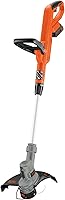
The BLACK+DECKER suits homeowners who want one tool for routine trimming and edging. Its adjustable handle and height positions help you set a comfortable working posture, and it converts between the two jobs.
It has a 12 in cutting swath and automatic line feed that needs no bumping. The kit includes a 2.0 Ah battery and charger, so a buyer starting without compatible equipment has the basic power setup.
Choose it for regular grass upkeep around a small lawn and paths. Skip it if your main job is clearing broad areas of heavy growth or cutting woody brush.
EGO: for longer runs along open lawn borders
The EGO suits homeowners with more open trimming ground to cover. Its 15 in swath and 0.095 in line make it the wider-cutting option among these three.
Variable speed lets you adjust output as you move between open grass and detailed work. The Rapid Reload head helps with replacing line, while the kit includes a 2.5 Ah battery and charger.
EGO claims up to 45 minutes of runtime with that battery; plan for conditions and workload to affect the result. Skip it if most of your work is a few narrow gaps where a wider cutting path offers little benefit.
Greenworks: for routine grass and light weeds
The Greenworks suits buyers who want variable speed and automatic feed for regular lawn upkeep. Its 12 in cutting path uses 0.065 in dual line, and the kit includes a 2.0 Ah battery and charger.
Use speed control to ease through light grass and take smaller bites where growth gets thicker. Automatic feed advances line without bumping, but you still need to keep the head clear and use the approved replacement line.
Choose it when trimming grass and light weeds is the main task. Skip it for woody growth, and choose a model with an explicit trim-to-edge conversion if that feature is central to your routine.
For the mechanics behind these choices, read how a weed eater works. Our cordless string trimmer buying guide covers battery planning, while the best string trimmers for home use compares options for household yard jobs.
Which common mistakes waste line and battery power?
Forcing the head, scraping hard surfaces, and ignoring tangled grass turn a short job into repeated stops. Correct your technique before assuming the tool needs more power.
Don't bump an automatic-feed head unless its manual specifically calls for it. If line stops advancing, shut down and check the spool rather than repeatedly striking the head.
Avoid cutting with line that's too short to work properly. Follow the feed procedure, then check for tangles or an empty spool if cutting still slows.
Don't keep running a head that's wrapped in grass. Disconnect power and clear it before continuing, and take shallower passes through tall growth.
What should you do after trimming?
Disconnect power, clear clippings, and inspect the head before storage. Wait for moving parts to stop and let the tool cool as directed.
Use the cleaning method in the manual, keeping water away from parts that aren't approved for washing. Check the guard and head for cracks, worn parts, and trapped grass.
Replace damaged parts before the next job and keep the correct spare line nearby. Follow battery charging and storage instructions, and store the tool securely away from children.
How to use a weed eater and choose your next step
Knowing how to use a weed eater means matching each pass to the job: level cuts for lawn edges, staged cuts for tall grass, and approved edging positions along pavement. If progress slows, reduce the bite and check the line before forcing the tool.
Choose BLACK+DECKER for small-yard trimming with edging, EGO for wider open borders, or Greenworks for routine grass and light weeds with variable speed. Before your next session, follow the string trimmer edging steps if paths and curbs are your main finishing job.
Frequently asked questions
Which direction should you move a string trimmer?
Sweep in the direction your manual recommends, keeping debris away from people, pets, windows, and vehicles, because line rotation affects where clippings travel. Keep the guard in its required position, work in short passes, and stop the motor if anyone enters the required safety distance.
Should you use a string trimmer on wet grass?
Wait for dry grass and stable footing, and follow your manual's restrictions on wet conditions, since wet clippings can collect around the head and slick ground makes control harder. Weather-resistant construction does not override instructions about rain, moisture, battery handling, or safe operation.
How high should you hold a weed eater?
Hold the cutting head at your intended grass height, keeping it level for ordinary trimming and clear of soil or hard surfaces. Adjust the handle and your stance so you can work upright, and follow the manual's limits on tool position rather than lifting the head toward your body.
How do you avoid scalping grass with a string trimmer?
Keep the cutting head level and remove a little grass at a time, using the nearby mowed lawn as your height guide. On uneven ground, shorten your sweeps and adjust your stance so the line does not dip into a hollow or scrape over a raised root.