DeWalt String Trimmer: Is 20V Enough for Your Yard?
Choose a DeWalt 20V string trimmer for routine grass trimming, especially if you own compatible 20V MAX batteries. Move to the DeWalt 60V kit when recurring overgrowth, a wider cutting path, or compatible attachments justify the extra carrying weight.
On this page (8 sections)
- Is a DeWalt 20V string trimmer enough for your yard?
- What changes when you move from 20V to 60V?
- How should you choose between 20V, 40V, and 60V?
- When is the Greenworks 60V option worth considering?
- What should you check before ordering?
- How should you set up and use your new trimmer?
- Which mistakes waste line and battery power?
- Which DeWalt string trimmer should you choose?
A DeWalt 20V string trimmer is enough for routine grass trimming around a maintained lawn, especially if you already own compatible 20V MAX batteries. Choose the 60V DeWalt kit when recurring overgrowth, a wider cutting path, or compatible attachments are part of your regular work.
The best choice depends more on what you trim than the size of your property. A large lawn with a few open borders can demand less trimming than a small yard packed with fences, beds, and obstacles.
Is a DeWalt 20V string trimmer enough for your yard?
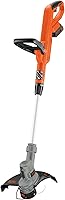
The DCST922B suits regular lawn maintenance: grass along fences, around beds, and in spots your mower can't reach. Its 14-inch cutting path, variable-speed trigger, and Hi/Lo switch let you match output to the job.
The folding hinge reduces its length by 40%, making this the clearest choice here for limited storage or frequent transport. Leave room for the head and guard when planning where it will fit.
This is a bare tool, with a guard and handle included. Buy it if you have a compatible battery and charger, or have already accounted for both separately.
Skip it if your main goal is an attachment system for several outdoor jobs. The 60V DeWalt below provides that feature, while the folding model's strongest reasons to buy are routine trimming and compact storage.
Grass height matters, too. Keeping up with trimming is easier on a cordless tool than letting weeds become tall and tangled between cuts.
What changes when you move from 20V to 60V?
The DCST972X1 adds an adjustable 15- or 17-inch cutting path and universal attachment capability. It also has a brushless motor, variable trigger, and Hi/Lo control for matching speed to the work.
Choose this DeWalt when you regularly clear broader strips or want to build around compatible outdoor attachments. Confirm that any intended add-on fits before buying it.
The kit includes a battery and charger. Its FLEXVOLT battery also works with DeWalt 20V MAX tools, which makes it useful for buyers expanding an existing DeWalt setup.
Compatibility works in a specific direction: the included FLEXVOLT battery can serve compatible 20V tools. Don't assume your ordinary 20V MAX batteries can power this 60V trimmer.
Skip this kit if your work consists mainly of short touch-ups and attachments would sit unused. A wider head and another battery setup provide little benefit when carrying comfort and storage are your main concerns.
How should you choose between 20V, 40V, and 60V?
Choose the work pattern first, then the battery platform. Voltage alone doesn't establish cutting width, comfort, or how much trimming you'll finish on a charge.
| Model | Best fit | Reason to skip |
|---|---|---|
| DeWalt DCST922B 20V | Maintained grass and folding storage | You want an attachment system |
| Greenworks 40V | Light yard care with a battery and charger included | You want to reuse DeWalt batteries |
| DeWalt DCST972X1 60V | Recurring overgrowth and attachment plans | You mainly do brief touch-ups |
| Greenworks 60V | Broader trimming areas and compatible Greenworks attachments | Carrying weight is your first concern |
Count the areas you actually trim before choosing. Long fence runs favor coverage per pass, while narrow beds reward controlled movement and careful trigger use.
Should you choose Greenworks 40V over a DeWalt 20V string trimmer?
Choose the Greenworks 40V kit for grass and light weeds if you need a battery and charger and have no reason to stay with DeWalt. It includes a 2.0 Ah battery.
Its 12-inch cutting path uses 0.065-inch dual line, with auto feed and variable-speed control. Auto feed advances the line during operation without bumping the head.
A narrower path is a reasonable fit for short trimming routes with plenty of borders and obstacles. For long, open stretches, it means more passes than a wider cutting path.
Skip this option if you already have suitable DeWalt batteries and want to keep charging simple. Also look elsewhere if your main task is neglected, heavy growth rather than regular upkeep.
When is the Greenworks 60V option worth considering?
Choose the Greenworks 60V model for broader trimming areas and compatible attachments, particularly if you want to build around that battery platform. Its brushless motor and 16-inch cutting path suit that role.
The kit includes a 4.0 Ah battery, charger, spool, and adjustable shoulder strap. Its Load N’ Go head provides quick line reloading, and it uses 0.095-inch dual line.
Skip it if compact storage or minimizing the load you carry matters more than wider coverage. A strap can spread the load, but you still need to guide and support the tool.
Attachment capability is useful only when compatible add-ons cover jobs you actually do. Read what an attachment-capable string trimmer is before treating that feature as a reason to switch platforms.
What should you check before ordering?
Check battery needs, working weight, and line requirements before committing to a model. These details affect your daily use more directly than a voltage label.
The DeWalt folding tool weighs about 7.3 pounds without a battery. The DeWalt 60V and Greenworks 60V have stated weights of 15 and 18.7 pounds, but those figures don't establish a consistent, battery-fitted comparison.
Try holding a similar trimmer in a working position if carrying comfort is uncertain. Consider balance and reach as well as the number on a weight label.
The DeWalt 20V uses 0.080-inch line and bump feed. The DeWalt 60V uses 0.080-inch dual line and also accepts DeWalt 0.095-inch line; buy the correct replacement line for your chosen head.
For a broader feature comparison, read the cordless string trimmer buying guide. If you already own batteries, use our DeWalt tool-only versus kit guide to check which package makes sense.
How should you set up and use your new trimmer?
Fit the guard, secure the handle, and adjust your stance before cutting, following the tool's manual. Remove the battery during assembly, line work, and head inspection.
On a folding model, check that the hinge is secured in its operating position. Set the handle so you can hold the head near the ground without hunching or reaching far forward.
Wear eye protection, long pants, and sturdy footwear. Clear stones, wire, and loose objects from the work area, and keep people and pets outside the clearance specified in the manual.
Start on a low setting where available, then increase output if the grass needs it. Let the line tips cut rather than pushing the whole head into the growth.
For tall grass, work down in stages so long stems are less likely to wrap around the head. Take narrower bites if the tool slows, and stop before clearing any wrapped material.
For edging technique and working around obstacles, see how to use a string trimmer.
Which mistakes waste line and battery power?
Forcing the head into dense growth and scraping hard surfaces are common ways to waste line and battery power. Use controlled passes and keep the cutting tips just clear of fences, walls, and paving.
Avoid running at full output for every task. More speed isn't useful when a lower setting cuts cleanly, especially near plants or delicate surfaces.
Don't fit thicker line simply because it sounds tougher. Use only a diameter approved for the head, since the wrong line can feed poorly and increase load.
Refill the spool with the battery removed, following the correct winding direction and length. Our guide to loading string trimmer line explains the steps and common feed problems.
After use, remove the battery and clear grass from the head, guard, and vents as the manual directs. Store the equipment dry and follow the battery's charging and storage instructions.
Woody stems call for a different tool decision. Read whether a string trimmer can cut thick weeds and brush before treating either 60V option as a brush cutter.
Which DeWalt string trimmer should you choose?
Choose the DeWalt 20V string trimmer if routine grass care, folding storage, and battery reuse are your priorities. Choose the DCST972X1 when its wider swath and attachment capability solve recurring jobs in your yard.
Starting without batteries? The Greenworks 40V kit fits light upkeep, while its 60V alternative suits broader trimming work and attachment plans if you're comfortable carrying it.
Before ordering, write down your battery needs and the toughest job you'll regularly do. Use our best battery string trimmers comparison if these models don't match both.
Frequently asked questions
Is a DeWalt 20V string trimmer powerful enough?
A DeWalt 20V string trimmer is a sensible choice for regular grass trimming around a maintained lawn; choose the DCST922B if folding storage and existing compatible batteries matter most. For recurring tough overgrowth or attachment use, the DCST972X1 is the better fit among these DeWalt models.
Can you use a DeWalt 60V battery in a 20V tool?
The FLEXVOLT battery included with the DCST972X1 works with both DeWalt 60V MAX and 20V MAX tools; that compatibility doesn't mean an ordinary 20V MAX battery can power the 60V trimmer. Confirm compatibility for your exact battery, charger, and tool before choosing a bare tool or kit.
Is 40V or 60V better for a string trimmer?
Choose by the model's job fit rather than voltage alone; the Greenworks 40V option suits grass and light weeds, while the 60V options here offer wider paths and attachment capability. Battery compatibility, carrying comfort, line size, and included equipment are more useful buying checks than a voltage ranking.
Does higher voltage mean longer runtime?
Higher voltage doesn't guarantee longer runtime; battery capacity, motor load, speed, line, and grass conditions all affect how long a trimmer runs. Compare runtime guidance for the exact tool and battery combination, and don't compare amp-hour numbers across different voltage platforms as if they measure the same stored energy.