6 Best String Trimmers for Home Use (October 2026)
The best string trimmers for home use include the WORX WG163 20V 2-in-1 Trimmer and Edger for small lawn upkeep, the BLACK+DECKER 20V MAX 2-in-1 Trimmer and Edger for shared yard chores, and the EGO Power+ ST1502SA 15-Inch Trimmer for broad trimming areas.
On this page (10 sections)
- Which string trimmers work best for home use?
- How we chose these home string trimmers
- Best string trimmers for home use by yard type
- How do you choose the best string trimmer for home use?
- How much battery capacity do you need for home trimming?
- What should you do before the first trimming session?
- How do you trim grass without wasting line or damaging plants?
- Which common mistakes shorten a trimming session?
- How do you care for a cordless string trimmer?
- Which string trimmer should you choose for your home?
The best string trimmer for home use is the WORX WG163 for small lawns with regular trimming and edging. Choose EGO for broader grass strips, or BLACK+DECKER if adjustable fit and automatic line feed are your main priorities.
Buy for the work your mower leaves behind. A large lawn with a few trees may need less trimming than a small yard lined with fences, beds and sidewalk edges.
If you're still deciding on cordless power, start with our cordless string trimmer buying guide. For other battery-powered options, compare our best battery string trimmers.
Our picks at a glance
-
1
 Best for small lawn upkeep
WORX WG163 20V 2-in-1 Trimmer and Edger
9.2/10 our score
See it on Amazon -
2
 Best for shared yard chores
BLACK+DECKER 20V MAX 2-in-1 Trimmer and Edger
8.9/10 our score
See it on Amazon -
3

- 4
 Check it
Greenworks 40V 12-Inch Trimmer
Best for mixed grass tasks - 5
 Check it
CRAFTSMAN V20 Trimmer and Edger
Best for V20 households - 6
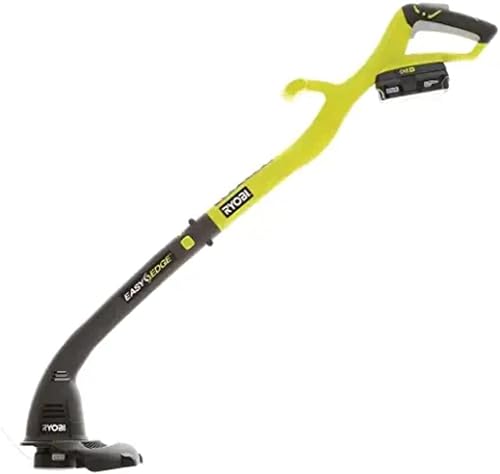 Check it
Ryobi ONE+ 18V Trimmer and Edger
Best for tiny yard touchups
Which string trimmers work best for home use?
WORX is the strongest all-around choice for small-yard upkeep, while EGO better suits broad trimming areas. The other picks make sense when adjustable fit, speed control or an existing battery system drives your choice.
Use the comparison to narrow your options, then read the matching product section. Cutting width shows how much ground the head covers, but it doesn't measure how well a tool handles dense growth.
| Product | Best for | Cutting width | Weight | Battery kit | Our score |
|---|---|---|---|---|---|
| WORX WG163 20V 2-in-1 Trimmer and Edger | small lawn upkeep | 12 in | 5.5 lb machine weight | Two 20V batteries and charger | 9.2 |
| BLACK+DECKER 20V MAX 2-in-1 Trimmer and Edger | shared yard chores | 12 in | 5.7 lb | One 20V MAX 2.0 Ah battery and charger | 8.9 |
| EGO Power+ ST1502SA 15-Inch Trimmer | broad trimming areas | 15 in | 7.4 lb | One 56V 2.5 Ah battery and charger | 8.7 |
| Greenworks 40V 12-Inch Trimmer | mixed grass tasks | 12 in | 12 lb stated item weight | One 40V 2.0 Ah battery and charger | 8.6 |
| CRAFTSMAN V20 Trimmer and Edger | V20 households | 13 in | 6.3 lb | One V20 2.0 Ah battery and charger | 8.1 |
| Ryobi ONE+ 18V Trimmer and Edger | tiny yard touchups | 10 in | 4 lb | 18V compact battery and P118 charger | 8.0 |
How we chose these home string trimmers
We compared fit for routine home maintenance, including edging support, line control, cutting width, included batteries and stated weight. The scores reflect those features and their usefulness for common yard jobs.
A tool that is easy to guide around a flower bed can be a better home choice than one built around maximum coverage. We also considered how each kit fits a household's existing tools and charging setup.
Stated weights don't establish a consistent ready-to-use weight for every model. Compare how a tool balances with its battery installed, especially if you expect to hold it for a long session.
Best string trimmers for home use by yard type
Choose the tool that fits your usual trimming route, rather than an occasional worst-case cleanup. Each pick below has a clear role, along with a reason to choose something else.
WORX WG163 20V 2-in-1 Trimmer and Edger: Best for small lawn upkeep
- Push-button Command Feed
- Head tilts 90 degrees
- Rubberized edging wheels
- Adjustable spacer guard
A useful fit for homeowners who alternate between trimming around beds and edging sidewalks. Support wheels help guide the tool in edging mode.
Pros
- Two batteries included
- Wheels support edging
- Tilting head reaches awkward spots
Cons
- Narrower path than EGO
- Better matched to routine upkeep than neglected growth
WORX suits a homeowner who trims around beds, then turns to the sidewalk for edging. Its rubberized support wheels give the tool a supported position along the edge instead of requiring you to hold the head entirely freehand.
The head tilts 90 degrees, which is useful when approaching uneven ground or awkward spaces. Its adjustable spacer guard also provides a physical guide near plants, though you still need to keep the cutting line clear of stems.
Command Feed advances line at the press of a button. That gives you direct control when the exposed line gets short, without needing to bump the head.
The second included battery gives you a spare to swap in when charged. It doesn't establish how long your whole job will take, since growth and cutting technique affect battery use.
Choose WORX for regular small-yard care with frequent edging. Skip it if broad, open strips dominate your route and a wider head would save repeated passes.
BLACK+DECKER 20V MAX 2-in-1 Trimmer and Edger: Best for shared yard chores
- Automatic Feed Spool
- Adjustable handle and height
- Converts to wheeled edger
- Wall-mountable charging base
Adjustable height and handle positions suit a household where different people handle the trimming. Automatic feed removes the need to bump the head for more line.
Pros
- Adjustable fit
- Automatic line feed
- Battery and charging base included
Cons
- No spare battery included
- Narrow swath adds passes across broad areas
BLACK+DECKER suits a household where more than one person handles yard chores. Adjustable handle and height positions let each person set the tool closer to a comfortable working posture.
Its Automatic Feed Spool advances line without bumping. This is a useful choice if you want to focus on guiding the head rather than deciding when to release more line.
The tool converts to a wheeled edger, so it covers grass around obstacles and upright cuts along paths. Its wall-mountable charging base also gives the battery a regular home between jobs.
With one battery included, plan around a single charged pack unless you already have compatible BLACK+DECKER Powerconnect batteries. Don't assume automatic feed means unlimited cutting without checking the spool.
Choose BLACK+DECKER for adjustable fit and simple line management. Skip it if you want a spare battery in the box or need to cover broad areas quickly.
For help matching electric power to your work, read are electric weed eaters any good?.
EGO Power+ ST1502SA 15-Inch Trimmer: Best for broad trimming areas
- Variable-speed control
- Rapid Reload head
- 0.095 in cutting line
- Brushless motor
The widest swath here suits broad strips of grass and longer cleanup routes. Variable speed lets you ease off around more delicate edges.
Pros
- Widest cutting path here
- Rapid Reload line loading
- Variable-speed trigger
Cons
- Higher stated weight than the smaller WORX and BLACK+DECKER picks
- No dedicated edging conversion specified
EGO is the better fit when your mower leaves broad strips along a fence or other open boundaries. Its 15 in cutting swath covers more width per pass than the other picks here.
It uses 0.095 in cutting line and a brushless motor. Variable speed lets you adjust the trigger input as you move from open grass toward places that need more care.
The Rapid Reload head helps simplify line replacement. EGO claims up to 45 minutes of runtime with the included battery and a 50-minute charge with the included charger; don't plan a job around reaching that maximum.
This model makes less sense when your entire trimming route consists of small corners and narrow beds. Its wider reach demands care near plants, and it lacks the dedicated edging conversion specified for several smaller picks.
Choose EGO for coverage across open trimming areas. Skip it if supported sidewalk edging is your main task or a smaller tool better fits your reach.
Our EGO ST1502SA review covers the model in more detail.
Greenworks 40V 12-Inch Trimmer: Best for mixed grass tasks
- Variable-speed trigger
- Automatic line feed
- 0.065 in dual line
- Battery and charger included
Continuous speed adjustment suits a route that moves between light growth near beds and thicker patches of grass. Automatic feed handles line advance.
Pros
- Variable-speed control
- Dual-line cutting system
- Complete battery kit
Cons
- Higher stated item weight than the other picks
- Best suited to grass and light weeds
Greenworks suits routine maintenance where the grass changes from thin growth near beds to thicker patches elsewhere. Its variable-speed trigger lets you adjust output as you move, rather than choose between fixed settings.
The dual-line head uses 0.065 in line, and automatic feed advances it during operation. This combination fits grass and light weeds around paths, fences and landscaping.
The important buying caution is weight. Its stated item weight is 12 lb, so don't choose it simply because a compact cutting path suggests a low carrying load.
If handling effort is your deciding factor, resolve the assembled weight before buying. A tool that is tiring to hold can make a short trimming route harder than its cutting width suggests.
Choose Greenworks if continuous speed control matches your varied grass work. Skip it if you mainly want the lowest stated weight or regularly face woody growth.
Our Greenworks 40V trimmer review gives you a closer look at its controls and intended role.
CRAFTSMAN V20 Trimmer and Edger: Best for V20 households
- Two speed settings
- Telescoping pole
- Automatic line advance
- VERSATRACK-compatible storage hook
A practical choice for a household already using CRAFTSMAN V20 tools. Two speed settings and edging conversion cover routine lawn maintenance.
Pros
- Shares the V20 battery platform
- Adjustable pole
- Trims and edges
Cons
- Two fixed speeds rather than continuous adjustment
- VERSATRACK storage system sold separately
CRAFTSMAN is a sensible fit for homeowners already using V20 tools. Shared battery compatibility can make it easier to keep a charged pack available, provided your batteries match the tool's requirements.
Its 13 in swath falls between the smaller models and EGO. Two speed settings give you a simple choice between conserving runtime and using more power where the grass calls for it.
The telescoping pole helps set the working length, and the tool converts for edging. Automatic line advance removes the need to bump the head for more line.
An integrated hook fits the VERSATRACK system, which is sold separately. That is useful if you already have the storage system, but it shouldn't decide the purchase ahead of fit and cutting needs.
Choose CRAFTSMAN for V20 compatibility and straightforward speed choices. Skip it if you prefer continuous trigger control or need the widest cutting path.
For spool replacement, follow the manual and our guide to loading line in a string trimmer.
Ryobi ONE+ 18V Trimmer and Edger: Best for tiny yard touchups
- Narrow cutting path
- Rotating shaft for edging
- Curved-shaft design
- ONE+ battery compatibility
The narrowest cutting path here suits short trimming routes and tight spaces. Its rotating shaft adds edging capability without another tool.
Pros
- Lowest stated weight here
- ONE+ battery compatibility
- Rotating shaft for edging
Cons
- Slowest coverage of broad areas by cutting width
- Included compact battery may be P102 or P103
Ryobi suits a small trimming route with narrow gaps and short lawn edges. Its 10 in cutting width is the smallest here, which makes more sense around close landscaping than across open grass.
The rotating shaft adds edging capability. That gives a homeowner with limited storage one tool for touching up grass around obstacles and along a path.
Its stated weight is 4 lb, the lowest in this group. Treat that as a starting point for comparison rather than proof of how the complete tool will balance in your hands.
The kit contains a P2003 curved-shaft trimmer and edger, a P118 charger and a compact P102 or P103 battery. Existing ONE+ users may find the shared battery system more useful than starting another platform.
Choose Ryobi for tiny-yard touchups and narrow spaces. Skip it if your route includes broad strips that would need many overlapping passes.
A narrow head still needs room to work safely, so don't push it between plants where the spinning line can strike stems.
How do you choose the best string trimmer for home use?
Start with your trimming route, the growth you cut and how the tool fits you. Battery voltage and cutting width help describe a tool, but neither should make the decision alone.
Walk the yard before choosing. Note the longest fence run, narrowest gap, number of trees and amount of pavement edging you maintain.
Match a home-use string trimmer to your actual route
Count the areas the mower cannot reach, not just the size of your property. Long borders, slopes and obstacles can create more trimming work than a larger patch of open lawn.
A narrow cutting path suits small pockets of grass. A wider one becomes useful when you repeatedly sweep across broad strips, but it needs more clearance around nearby plants.
Also separate weekly upkeep from seasonal clearing. Buying around one neglected patch can leave you with a larger tool than you want for every routine job.
Check growth before choosing more power
Soft grass and young weeds are different jobs from thick, tangled or woody stems. Regular cutting keeps growth manageable and reduces the temptation to force a grass trimmer into heavier clearing work.
If woody growth is the main problem, pause before choosing any of these picks. Our string trimmer vs brush cutter guide explains when a different tool suits the job.
Don't fit an unapproved blade or thicker line to make a trimmer do heavier work. Use only cutting equipment and line sizes allowed by its manual.
Choose fit before extra features
You should be able to stand upright with relaxed shoulders and both hands on the handles. If reaching the grass requires bending or holding your arms far from your body, the setup needs adjustment.
Balance matters as much as a weight number. A tool that pulls strongly at one end can require constant effort to keep the head level.
Adjustable shafts and handles help, especially when people of different heights share the tool. Stop and reset the fit if you notice yourself hunching as you work.
Decide how much edging support you need
Choose a converting model if lawn edges along sidewalks are a regular part of the job. Support wheels can help guide the head, while a freehand approach calls for more steady control.
A string trimmer maintains a grass boundary, but it doesn't replace a blade edger for every task. Reclaiming a deeply overgrown pavement edge may require a different tool.
Keep the cutting plane aligned with the edge rather than swinging across it. Our guide to edging with a string trimmer explains the technique.
How much battery capacity do you need for home trimming?
Choose batteries around the time you spend trimming and your access to charging. A spare pack is useful for interruptions, while an existing compatible platform may simplify the whole yard-care routine.
Voltage alone doesn't tell you runtime or cutting strength across different brands. Battery capacity, motor design, line, growth and trigger use all affect the work you get from a charge.
Use runtime claims as planning guides rather than promises. Heavy grass, repeated passes and sustained high speed can shorten a session compared with lighter maintenance.
Before adding another battery platform, consider your other yard tools. A shared compatible pack may be useful, but one battery cannot power your trimmer and another tool at the same time.
Keep batteries dry and follow their charging and storage instructions. Let a hot pack cool as directed, and keep the charger away from clippings and damp ground.
What should you do before the first trimming session?
Fit the guard, adjust the tool and clear the work area before installing the battery. A careful setup makes the head easier to control and reduces avoidable stops.
Read the model's instructions for assembly and line feed. Fit the supplied safety parts, tighten the handle and check that the spool cap is seated correctly.
Set the shaft length and handle position with the tool switched off and battery removed. Aim for a comfortable stance with the head near the grass and the handles within easy reach.
Inspect the route for wire, stones, toys, hoses and other loose objects. Move them before cutting rather than trying to steer around them with the head spinning.
Wear eye protection, long pants and sturdy closed-toe footwear, plus any other protection required by the manual. Keep people and pets outside the stated clearance area.
Start in an open patch where you can learn the controls. Check the feed procedure before working near plants, fences or pavement.
How do you trim grass without wasting line or damaging plants?
Let the line tips do the cutting and work in small passes. Pressing the head into dense grass or hard surfaces uses line quickly and makes the cut harder to control.
Hold the head near level for grass trimming. Sweeping in a shallow arc helps maintain an even height instead of cutting dips into the lawn.
For tall grass, remove the upper growth first, then lower the head in stages. Taking the full height at once can wrap grass around the head and slow the tool.
Approach trees and shrubs carefully. Trimmer line can damage bark and stems, and a spacer guard doesn't make direct contact safe.
Use the lowest speed that cuts cleanly where speed control is available. Increase output for growth that needs it, rather than holding full speed through every light patch.
Watch where debris travels and keep it directed away from people, windows and vehicles. Follow the rotation and operating guidance for your model.
For a fuller technique guide, see how to use a string trimmer the right way.
Which common mistakes shorten a trimming session?
The biggest avoidable problems are forcing the head, feeding line incorrectly and using pavement as a cutting surface. Each can waste battery energy or line without improving the lawn.
- Grinding against concrete: Keep the line cutting grass beside the edge rather than rubbing along the hard surface.
- Repeatedly triggering line advance: Follow your model's feed procedure instead of cycling the controls without checking the line.
- Running with very short line: Restore the proper cutting length so you don't keep moving the head closer to obstacles.
- Forcing tangled growth: Stop, remove the battery and clear wrapped grass as the manual directs.
- Removing the guard: Keep it fitted, including its line-cutting component, so the tool works with the intended line length.
- Scalping around posts: Keep the head at the surrounding grass height rather than carving a bare ring.
If cutting suddenly worsens, stop and inspect the head before increasing speed. A depleted spool, wrapped grass or damaged line may be the cause.
How do you care for a cordless string trimmer?
Remove the battery before cleaning, clearing grass or opening the spool. Basic care centers on keeping the head clear and maintaining the correct line supply.
After use, let moving parts stop and brush away clippings from the guard and head. Follow the manual's cleaning method rather than spraying the tool with water.
Check the spool cap, guard and exposed line for damage. Replace worn parts with compatible replacements instead of improvising a repair around the spinning head.
Keep spare line or a compatible spool ready before the current supply runs out. Match the diameter, winding direction and loading method to the manual.
Automatic feed handles line advance, but it doesn't refill the spool or clear a jam. If feeding becomes uneven, check the spool seating and line routing with the battery removed.
Store the tool securely in a dry place with the battery removed as directed. Keep the charger and spare line together so the next session starts with everything ready.
Which string trimmer should you choose for your home?
The best string trimmer for home use is the one that fits your regular route without making it harder to handle. Make the final choice around the job you'll repeat most often.
Choose WORX for small-lawn upkeep with frequent sidewalk edging. Choose BLACK+DECKER if adjustable fit and automatic feed matter most, especially when several people share yard chores.
Pick EGO when broad grass strips make coverage your priority. Consider Greenworks for continuous speed adjustment across mixed grass tasks, after resolving its carrying weight.
Choose CRAFTSMAN when V20 compatibility and simple speed settings fit your household. Choose Ryobi for short touchups and tight spaces where a narrow path is useful.
Before ordering, confirm the tool fits your reach and that you have the right line ready. For a broader comparison of electric options, browse our best electric string trimmers.
WORX WG163 20V 2-in-1 Trimmer and Edger: Best for small lawn upkeep
- Push-button Command Feed
- Head tilts 90 degrees
- Rubberized edging wheels
- Adjustable spacer guard
A useful fit for homeowners who alternate between trimming around beds and edging sidewalks. Support wheels help guide the tool in edging mode.
Pros
- Two batteries included
- Wheels support edging
- Tilting head reaches awkward spots
Cons
- Narrower path than EGO
- Better matched to routine upkeep than neglected growth
BLACK+DECKER 20V MAX 2-in-1 Trimmer and Edger: Best for shared yard chores
- Automatic Feed Spool
- Adjustable handle and height
- Converts to wheeled edger
- Wall-mountable charging base
Adjustable height and handle positions suit a household where different people handle the trimming. Automatic feed removes the need to bump the head for more line.
Pros
- Adjustable fit
- Automatic line feed
- Battery and charging base included
Cons
- No spare battery included
- Narrow swath adds passes across broad areas
EGO Power+ ST1502SA 15-Inch Trimmer: Best for broad trimming areas
- Variable-speed control
- Rapid Reload head
- 0.095 in cutting line
- Brushless motor
The widest swath here suits broad strips of grass and longer cleanup routes. Variable speed lets you ease off around more delicate edges.
Pros
- Widest cutting path here
- Rapid Reload line loading
- Variable-speed trigger
Cons
- Higher stated weight than the smaller WORX and BLACK+DECKER picks
- No dedicated edging conversion specified
Greenworks 40V 12-Inch Trimmer: Best for mixed grass tasks
- Variable-speed trigger
- Automatic line feed
- 0.065 in dual line
- Battery and charger included
Continuous speed adjustment suits a route that moves between light growth near beds and thicker patches of grass. Automatic feed handles line advance.
Pros
- Variable-speed control
- Dual-line cutting system
- Complete battery kit
Cons
- Higher stated item weight than the other picks
- Best suited to grass and light weeds
CRAFTSMAN V20 Trimmer and Edger: Best for V20 households
- Two speed settings
- Telescoping pole
- Automatic line advance
- VERSATRACK-compatible storage hook
A practical choice for a household already using CRAFTSMAN V20 tools. Two speed settings and edging conversion cover routine lawn maintenance.
Pros
- Shares the V20 battery platform
- Adjustable pole
- Trims and edges
Cons
- Two fixed speeds rather than continuous adjustment
- VERSATRACK storage system sold separately
Ryobi ONE+ 18V Trimmer and Edger: Best for tiny yard touchups
- Narrow cutting path
- Rotating shaft for edging
- Curved-shaft design
- ONE+ battery compatibility
The narrowest cutting path here suits short trimming routes and tight spaces. Its rotating shaft adds edging capability without another tool.
Pros
- Lowest stated weight here
- ONE+ battery compatibility
- Rotating shaft for edging
Cons
- Slowest coverage of broad areas by cutting width
- Included compact battery may be P102 or P103
Our top 3 picks at a glance
-
1
Best for small lawn upkeep
WORX WG163 20V 2-in-1 Trimmer and Edger
9.2/10 our score
See it on Amazon -
2
Best for shared yard chores
BLACK+DECKER 20V MAX 2-in-1 Trimmer and Edger
8.9/10 our score
See it on Amazon -
3
Frequently asked questions
What is the best string trimmer for home use?
The WORX WG163 is the best fit for routine small-yard trimming and sidewalk edging, thanks to its support wheels, tilting head and two included batteries. Choose the EGO ST1502SA instead if your main job is clearing broader strips of grass, where its wider swath matters more than edging support.
Is a battery string trimmer enough for a home yard?
A battery string trimmer can handle regular grass and light weed maintenance around many home yards. Dense growth, long fence lines and frequent heavy cleanup place greater demands on the tool and battery; our electric vs gas weed eaters guide explains when another power source makes sense.
Should you choose a trimmer that converts to an edger?
Choose a converting trimmer if you maintain grass along sidewalks or driveways and want one tool for both jobs. Wheels can help support the head, but they don't replace careful control; our guide to string trimmers with wheels explains which edging tasks suit that design.
How do you choose the right cutting width?
Choose cutting width for the space you actually trim, rather than your total lawn area. A narrow head suits tight beds and short touchups, while a wider swath covers broad grass strips in fewer passes; balance that coverage against weight, nearby plants and the amount of edging you do.


