6 Best Lightweight Electric Weed Eaters (October 2026)
The best lightweight electric weed eaters include the BLACK+DECKER 20V MAX LST522 Wheeled Edger Trimmer for small-yard upkeep, the Ryobi ONE+ 18V Trimmer and Edger for short trimming sessions, and the BLACK+DECKER 5-Amp Corded Trimmer and Edger for outlet-side lawn borders.
On this page (10 sections)
- How we chose lightweight electric weed eaters
- Which lightweight electric weed eater fits your yard?
- What makes a lightweight trimmer comfortable to carry?
- How much does the cutting width matter?
- Should you choose a corded or cordless trimmer?
- Which line-feed and edging features are worth having?
- How should you set up a lightweight electric weed eater?
- How can you trim with less effort and fewer mistakes?
- What care keeps a small electric trimmer ready?
- Which lightweight electric weed eater should you choose?
The BLACK+DECKER 20V MAX LST522 Wheeled Edger Trimmer is our top lightweight electric weed eater for small yards that need regular trimming and edging. Its cordless setup, adjustable fit and wheeled edging mode make it a useful all-around choice.
Choose for working weight and yard layout, rather than the smallest weight figure alone. A tool that keeps you upright and moves easily around your beds can be more comfortable than a lighter one that makes you reach.
For a broader look at battery systems and shaft styles, start with our cordless string trimmer buying guide. If gas is still an option, our guide to electric vs gas weed eaters explains the main tradeoffs.
Our picks at a glance
-
1
 Best for small-yard upkeep
BLACK+DECKER 20V MAX LST522 Wheeled Edger Trimmer
8.5/10 our score
See it on Amazon -
2
-
3
 Best for outlet-side lawn borders
BLACK+DECKER 5-Amp Corded Trimmer and Edger
7.1/10 our score
See it on Amazon
- 4
 Check it
Greenworks 24V 12-Inch Trimmer
Best for shared household use - 5
 Check it
BLACK+DECKER 14-Inch Corded Trimmer
Best for open lawn strips - 6
 Check it
BLACK+DECKER 4-Amp Corded Trimmer
Best for occasional grass cleanup
How we chose lightweight electric weed eaters
We compared weight, cutting width, power source and handling features, with regular home lawn care as the main use. The LST522 leads because it combines cordless movement with fit adjustments and a guided edging mode.
Weight figures aren't fully comparable across these tools. Greenworks excludes its battery, while the battery basis for the other cordless figures is unclear, so the lowest number doesn't settle the comfort question.
We also considered what happens after you pick up the tool. Line feed, grip position and the route between trimming areas affect how much stopping, bending and repositioning the job needs.
These are choices for maintaining lawn edges and cutting grass a mower misses. None earns a brush-clearing recommendation simply because it has a wider swath, a higher voltage or a larger motor.
| Product | Best for | Power | Weight | Cutting width | Our score |
|---|---|---|---|---|---|
| BLACK+DECKER 20V MAX LST522 Wheeled Edger Trimmer | small-yard upkeep | 20V MAX battery | 5.7 lb | 12 in | 8.5 |
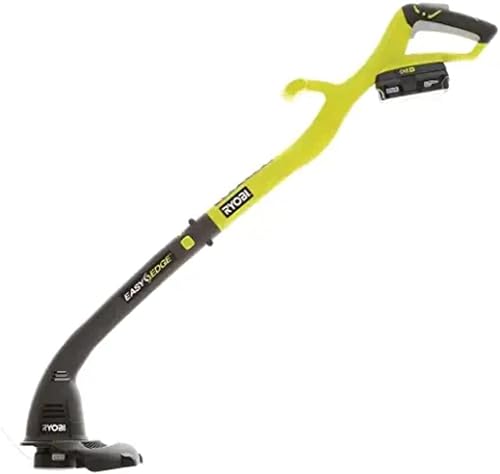
| Ryobi ONE+ 18V Trimmer and Edger | short trimming sessions | 18V battery | 4 lb | 10 in | 8.0 |
| BLACK+DECKER 5-Amp Corded Trimmer and Edger | outlet-side lawn borders | 5 amp corded electric | 5.4 lb | 13 in | 7.1 |
| Greenworks 24V 12-Inch Trimmer | shared household use | 24V battery | 4.08 lb without battery | 12 in | 7.0 |
| BLACK+DECKER 14-Inch Corded Trimmer | open lawn strips | 6.5 amp corded electric | 5.3 lb | 14 in | 6.9 |
| BLACK+DECKER 4-Amp Corded Trimmer | occasional grass cleanup | 4 amp corded electric | 2.7 kg, about 6 lb | 13 in | 6.6 |
Which lightweight electric weed eater fits your yard?
Choose the LST522 for mixed trimming and edging, Ryobi for compact cordless work, or a corded model for a clear route near an outlet. Greenworks is worth considering when shaft adjustment matters more than the lowest advertised weight.
BLACK+DECKER LST522: a lightweight electric weed eater for routine upkeep
BLACK+DECKER 20V MAX LST522 Wheeled Edger Trimmer: Best for small-yard upkeep
- 5.7 lb stated weight
- 12 in cutting width
- Two speed settings
- Wheeled edging mode
A complete cordless kit for homeowners who trim grass and edge paths during the same session. Adjustable height, handle settings and two speeds help you match the tool to the job.
Pros
- 2.5Ah battery and charger included
- Two speed settings
- Converts to wheeled edger
Cons
- Battery inclusion in stated weight is unclear
- Battery runtime limits longer sessions
The LST522 suits homeowners who finish a small lawn in one trimming-and-edging session. Its 12 in path balances coverage with room to work around beds, and the kit includes a 2.5Ah battery, charger, spool and guard.
Two speed settings give you a useful choice during the job. Start with the lower setting for routine grass, then use the higher setting where growth needs more cutting effort.
Automatic line advancement removes the need to bump the head. Adjustable height and handle settings help you position both grips before starting, while the wheeled edging mode supports regular sidewalk and driveway touch-ups.
Skip it if your main goal is the lowest possible carried weight or your yard needs long stretches of continuous cutting. Its stated weight is 5.7 lb, with battery inclusion unclear, and the supplied battery has no established runtime here.
Ryobi ONE+ 18V Trimmer and Edger: Best for short trimming sessions
- 4 lb stated weight
- 10 in cutting width
- Rotating shaft for edging
- ONE+ battery compatibility
A compact cordless choice for small patches and narrow lawn borders. It has the lowest stated weight here, but confirm the working weight with its battery attached.
Pros
- Lowest stated weight in this group
- Battery and charger included
- Rotating shaft for edging
Cons
- Narrow path needs more passes on open ground
- Battery inclusion in stated weight is unclear
The Ryobi suits short, detail-focused sessions around a small lawn. Its 10 in cutting path is useful where you spend more time placing the head beside borders than sweeping across open grass.
It has the lowest stated weight here at 4 lb, though battery inclusion in that figure is unclear. The kit includes a compact lithium-ion battery and charger, so you can start without choosing those separately.
A rotating shaft provides edging capability. It also belongs to the ONE+ system, which makes it worth considering if you already use compatible Ryobi tools and batteries.
Skip this model if your routine includes broad strips that need many overlapping passes. The narrow swath trades coverage for a compact cutting area, and that trade becomes less helpful as the open area grows.
For alternatives with different widths and battery setups, see our best battery string trimmers.
BLACK+DECKER 5-Amp Corded Trimmer and Edger: Best for outlet-side lawn borders
- 5.4 lb stated weight
- 13 in cutting width
- Automatic spool feed
- Wheeled edging conversion
A corded option for lawn borders and sidewalks within easy reach of an outlet. Adjustable height and handles help you set the fit, while a wheel guides edging.
Pros
- Automatic spool feed
- Adjustable height and handles
- Converts to wheeled edger
Cons
- Requires a suitable extension cord
- Cord needs routing around obstacles
The BLACK+DECKER ST8600 suits borders and sidewalks that follow a simple cord route. Its 5 amp motor drives a 13 in cutting path, and its stated weight is 5.4 lb.
Automatic spool feed handles line advancement without bumping. Height and handle adjustments let you set the reach, while the wheeled edging mode and edge guide help you follow a lawn boundary.
This is a sensible choice when charging is an unwanted extra step and the entire work area sits within suitable cord reach. Its built-in cord-retention system helps prevent the connection from pulling apart during movement.
Skip it for scattered beds, routes through gates or yards where a cord would cross the cutting area repeatedly. For more plug-in choices, see our best electric string trimmers roundup.
Greenworks 24V 12-Inch Trimmer: Best for shared household use
- 4.08 lb without battery
- 12 in cutting path
- Adjustable 3-piece shaft
- Battery and USB-C charger included
The adjustable shaft suits households where users need different handle positions and reach. This cordless kit is intended for regular grass and light-weed trimming.
Pros
- Adjustable shaft for handling and storage
- Brushless motor
- Battery and charger included
Cons
- Stated weight excludes battery
- Intended for grass and light weeds
The Greenworks ST1232 suits households that need to change the tool's fit between users. Its adjustable 3-piece shaft also helps with storage, making it useful when a fixed setup would be awkward.
A brushless motor drives a 12 in path using 0.065 in single line. Auto-feed advances the line, and Greenworks positions this model for grass and light weeds.
The kit includes a 2.0Ah battery and a 30W USB-C charger. Greenworks backs the tool and battery with a 3-year warranty, which is worth noting if warranty coverage influences your shortlist.
Its 4.08 lb weight excludes the battery, so don't compare that figure directly with a complete cordless setup. Skip it for rough clearing or if your decision depends on a confirmed ready-to-use weight.
For help choosing a battery family beyond this one tool, see our string trimmer brand guide.
BLACK+DECKER 14-Inch Corded Trimmer: Best for open lawn strips
- 5.3 lb stated weight
- 14 in cutting width
- Push-button line feed
- Wheeled edging guide
The widest cutting path here suits open strips where each pass can use the full swath. Push-button line feed gives you control over when to advance more line.
Pros
- Widest cutting width in this group
- Push-button line feed
- Adjustable handle and height
Cons
- Requires a suitable extension cord
- Broad cutting path needs care near plants
The BLACK+DECKER BESTE620 suits open grass strips where a broad sweep saves passes. Its 14 in path is the widest here, paired with a 6.5 amp motor and a stated weight of 5.3 lb.
EASYFEED advances line when you press a button. That suits buyers who want to choose when more line feeds without bumping the head against the ground.
The tool rotates into a wheeled edger, and both the handle and height can be adjusted. Cord retention helps keep the extension connection together as you move along a border.
Skip it if most of your work happens between delicate plants or beyond a practical cord route. The broader swath pays off only where you have room to use it, so don't choose this model just for its width.
BLACK+DECKER 4-Amp Corded Trimmer: Best for occasional grass cleanup
- 13 in cutting width
- Auto-feed line
- Built-in auxiliary handle
- Corded electric power
A straightforward corded choice for occasional grass trimming near an outlet. Its auxiliary handle provides a second grip, though its stated weight is higher than the other corded picks.
Pros
- Auto-feed line
- Auxiliary handle
- AF-100 spool included
Cons
- Highest stated weight in this group
- Cord limits working range
The BLACK+DECKER BEST935 suits occasional grass cleanup with a straightforward corded tool. It combines a 4 amp motor, a 13 in swath and automatic line feed.
A built-in auxiliary handle provides a second grip for guiding the head. It converts from trimming to edging and includes an AF-100 spool.
Its main drawback for this particular search is weight: 2.7 kg works out to about 6 lb. That makes it the highest stated weight in this group, even before you consider the effort of managing a cord.
Choose it when those basic features match a short, simple trimming route. Skip it when reducing carried weight is the priority, or when you specifically want the fit adjustments and wheeled edging features available on other picks.
What makes a lightweight trimmer comfortable to carry?
Balance and handle fit matter alongside weight, especially when the head stays extended in front of you. Compare the assembled tool in a normal working position whenever possible.
Compare working weight on the same basis
A cordless trimmer needs its battery attached to show what you'll carry. A bare-tool figure leaves out part of the load, and changing battery size can change both weight and balance.
For corded models, the tool's weight is only part of the effort. Pulling a cord across rough ground or around a corner can interrupt your movement even though you aren't carrying a battery.
Small differences on paper should not outweigh a poor fit. If you need to lift your shoulders, lock your elbows or bend your back to reach the grass, the setup needs adjustment.
Set the grips for relaxed control
Where adjustment is available, set the auxiliary handle so both arms can stay slightly bent. Keep the head near the ground without dropping your shoulders forward or reaching far from your body.
Users of different heights may need different shaft and handle positions. Check the available adjustment before buying, since a low weight doesn't guarantee that the tool will fit your reach.
How much does the cutting width matter?
Choose width for the shape of your trimming areas, rather than lawn size alone. A broad swath helps on open ground, while a smaller cutting area gives you more room beside obstacles.
Think about the grass your mower leaves behind. A large lawn might need only a narrow fence-line cleanup, while a small garden could have several broad patches that need trimming.
Around flowers, young trees and close-set beds, careful placement matters more than coverage. String can damage bark and soft stems, so leave space rather than trying to shave every edge against a plant.
For open strips, use controlled, overlapping sweeps instead of stretching sideways for more reach. A wider tool saves little effort if you hold it far from your body and tire your arms.
Should you choose a corded or cordless trimmer?
Choose cordless for broken-up routes and obstacles, or corded for a reachable work area with a clear cable path. Sketch the trimming route before deciding which setup is simpler.
Choose cordless for movement between areas
Battery power makes sense when you move between a front yard, side passage and rear beds. It also removes the need to work a cable around trees or through a gate.
All 3 cordless picks here include a battery and charger, but none has a comparable runtime figure available here. Don't assume the supplied battery will finish a particular yard based on voltage or capacity alone.
Grass density, line condition and cutting habits all affect battery use. Existing compatible batteries can make a system more practical, but confirm compatibility rather than assuming that batteries with similar voltage labels interchange.
Choose corded for an easy cable route
A corded model suits a border you can follow without repeatedly crossing or moving the cable. It avoids charging stops, though the motor still needs to be used within its instructions.
Choose an outdoor-rated extension cord with the length and wire gauge required by the manual. Longer reach can require a different gauge, so don't select a cable only because it reaches the far corner.
Use a GFCI-protected supply and follow the tool's instructions for dry conditions and connections. Keep the cable behind your work and clear of the cutting head throughout the route.
Which line-feed and edging features are worth having?
Choose feed controls for convenience and edging features for the borders you maintain. Neither feature changes a lawn trimmer into equipment for clearing woody stems.
Automatic feed handles line advancement through the tool's feed system. Push-button feed lets you request more line, while both approaches avoid the need for a bump-feed action.
Follow the exact feed instructions for your model. Repeatedly operating a control to solve every cutting problem can waste line when the real issue is a tangled spool or an overloaded head.
A wheeled edging guide helps support and guide the tool along a firm boundary. It is useful for routine touch-ups, but it doesn't make heavily overgrown edges disappear in one pass.
A rotating shaft changes the cutting orientation for edging. Read our guide to edging with a string trimmer for the technique before working beside pavement.
How should you set up a lightweight electric weed eater?
Fit the guard, set the handles and inspect the work area before connecting power. A few minutes of setup prevents avoidable stops and helps you start in a comfortable position.
Assemble and inspect before powering up
Follow the manual's assembly order, including any shaft joints and fasteners. Check that the guard and auxiliary handle are secure, then inspect the spool and line for correct seating.
Use the specified line type and diameter. Thicker line is not a shortcut to more cutting power, and fitting an unapproved blade or attachment can create a serious hazard.
With power disconnected, adjust the grip positions and practice the normal carrying posture. If the head cannot sit near the grass without leaning, revisit the settings before starting.
Prepare the route and protective gear
Remove stones, wire, toys and loose branches from the area. Pay attention near windows, parked vehicles and gravel, where thrown debris can cause damage.
Wear eye protection, sturdy footwear and long pants, along with any other protection the manual requires. Keep people and pets outside the tool's specified clearance area.
For cordless tools, charge and install the battery as directed. For corded tools, inspect the cable, use the cord-retention feature where provided and plan a route that keeps the connection away from the cutting area.
How can you trim with less effort and fewer mistakes?
Cut with the line tips in shallow passes, keeping the tool close enough to your body for relaxed control. Forcing the head into dense grass wastes effort and can slow cutting.
Work through tall growth in layers
Start higher on tall grass and lower the head in stages. Feeding the whole clump into the head at once can wrap long stems around the shaft or overload the cutting area.
Step forward as you work instead of reaching at arm's length. Keep the head at a consistent height so the lawn edge doesn't develop low patches or exposed soil.
Use the discharge direction described in the manual to plan your stance and movement. Our guide to using a string trimmer correctly explains the basic cutting approach.
Avoid using hard surfaces as cutting guides
Don't press the line against concrete, brick or fencing to find the edge. Repeated contact uses line quickly and can send fragments or debris toward nearby surfaces.
Move slowly near beds and tree trunks, leaving a margin where needed. For a neat lawn boundary, make regular light passes rather than waiting for a thick mat to grow over the pavement.
Stop when the tool needs attention
If cutting weakens, stop and check for short line, tangled growth or a low battery as appropriate. Don't keep pushing harder to compensate for a problem at the head.
Release the control and wait for all movement to stop before setting the tool down. Disconnect the plug or remove the battery before clearing wrapped grass or touching the spool.
What care keeps a small electric trimmer ready?
Keep the head clean, use the correct line and store the tool dry. Simple care helps prevent feed problems and keeps the next trimming session from starting with a repair.
After use, disconnect power and remove packed grass from around the guard and head as the manual directs. Avoid washing electrical parts or spraying the tool unless its instructions specifically allow it.
Check the spool for crossed line, damage or incorrect winding when feed becomes erratic. Our guide to loading line in a string trimmer covers the steps that commonly cause trouble.
Inspect cords for damage and battery contacts for debris before the next job. Follow the battery and charger instructions for storage temperature and charging, and keep replacement line where you can find it.
Which lightweight electric weed eater should you choose?
Choose your lightweight electric weed eater by the job that causes the most effort. Use these rules to narrow the shortlist before comparing small weight differences:
- Mixed trimming and edging: Choose the LST522 for cordless movement, adjustable fit and a wheeled edging mode.
- Short, detailed cordless work: Choose Ryobi when its compact path suits your borders, after checking its working weight.
- A reachable border near an outlet: Choose the ST8600 for automatic feed and guided edging.
- Different users sharing a tool: Choose Greenworks when shaft adjustment helps each person find a better fit.
- Open grass strips: Choose the BESTE620 when you can use its wider swath and manage a cord easily.
- Occasional basic cleanup: Consider the BEST935 if its simpler setup fits your needs and its higher weight is acceptable.
Before ordering, confirm that your choice fits your reach and can cover your actual route with its power setup. For a broader shortlist organized around household jobs, see our best string trimmers for home use.
Our top 3 picks at a glance
-
1
Best for small-yard upkeep
BLACK+DECKER 20V MAX LST522 Wheeled Edger Trimmer
8.5/10 our score
See it on Amazon -
2
-
3
Best for outlet-side lawn borders
BLACK+DECKER 5-Amp Corded Trimmer and Edger
7.1/10 our score
See it on Amazon
Frequently asked questions
What is the lightest electric weed eater here?
The Ryobi ONE+ 18V Trimmer and Edger has the lowest stated weight at 4 lb, but its battery inclusion is unclear; Greenworks gives a weight of 4.08 lb without its battery. Compare the tools with batteries attached before deciding which will feel lighter during your usual trimming route.
Are cordless or corded electric weed eaters lighter?
Neither power source is always lighter: cordless tools add battery weight, while corded models bring cord drag and routing work. Compare the complete working setup, then consider your yard layout: a corded trimmer can suit a clear lawn border, while cordless movement helps around trees and separate beds.
Does a wider cutting path make trimming easier?
A wider cutting path reduces passes where you have room to use the full swath, while narrow paths can be easier to place between beds and obstacles. Choose for the space you actually trim, since a broad head offers little benefit when delicate plants force you to work slowly.
What should I check before buying a lightweight trimmer?
Check working weight, handle fit, cutting width and access to power before choosing; confirm battery inclusion in cordless weight figures and the manual's extension-cord requirements for corded models. Also consider how much edging you do, since a wheel or rotating shaft can make that part of the job easier.
Can a lightweight electric weed eater cut thick brush?
These picks suit lawn trimming better than woody brush clearing: Greenworks specifically targets grass and light weeds, and you should follow each tool's approved uses. For heavier growth, read our guide to string trimmers for thick weeds and brush before choosing equipment or trying to change cutting attachments.


